Selfless Love

Last month, Saint James and I celebrated our five year anniversary.

Celebrated may not be the proper term.  Marched straight through, with a kiss and an extravagant set of jewelry for me on Saint James’ part.

Five years.

While some couples are in the honeymoon stage at five years, Saint James and I jumped into the trenches quickly.  Five years has meant two children, four moves and a half dozen jobs between the two of us.  And currently, our marriage looks like insanely long work weeks for him and my brain being scrambled and feasted on, answering “Why?” at least 783 times a day with me actually explaining colloquial terms and basic science.

Genesis 2:24 says, “Therefore shall a man leave his father and his mother, and shall cleave unto his wife: and they shall be one flesh.” (KJV)  While some couples are learning to live together at five years in, we’ve been working on cleaving together since year one.  It’s not always pleasant.

Cleave is an interesting word in that one definition means “to split or separate” and the second means “to adhere or stick.”  I have realized marriage is decidedly both, and it’s no accident that a complicated etymology has left both definitions even into modern times.

Marriage is being split, flayed open and hollowed out, like the jars of clay Saint Paul talks about in his letter to the Corinthians.  But it’s also being joined together, learning to work on the same team and embrace unity despite our inherent selfish natures.  The cloven hoof is what determined the cleanliness of an animal in the Old Testament, and I’m convinced that the hollowing out to be filled with the Spirit is still what makes us “clean” today.

James is surely “earning” his sainthood dealing with my manic outbursts and loving our children patiently, one day at a time.  He works hard, loves deeply, and walks faithfully.  While unloading the dishwasher and steamvacing after the dog, working sixteen hours to provide for his family and sleeping when he can may not be the romance of film, I increasingly understand and appreciate the truth and power of his selfless, sacrificial love.

Jesus said to his disciples, “Greater love has no one than this: to lay down one’s life for one’s friends.” (John 15:13 NIV)  In fact, each one of the gospels note Christ’s comment to deny himself in order to follow Jesus best.  In a culture that embraces self-discovery, self-exploration and self-actualization with no real thought for unity, the message is as bizarre today as it was 2000 years ago.

But I believe we can learn to love selflessly.  That when we are born of the Spirit, and with the help of the Paraclete, we can learn to love as God does.  That despite our imperfections, despite our lack of understanding, communication and pure communion, that we can learn to love people.  That in His sovereignty, God knew our selfishness would make selflessness all the more beautiful.  That when we embrace our God natures as fellow heirs of Christ (Romans 8:17), we can love our spouses, our children, our soul friends, our families with a love that is the whole of us, but also all that is not us.
Saving Grace

Our tomatoes were dying.

I read something on them.  Lack of nitrogen, too much sun, not enough water.  They were tall and lanky with yellow, spotted, curling leaves at the base of the plant that would shrivel away into brown death.  I was upset.

Saint James picked up some fertilizer on the way home the next day, sprinkling each plant around its roots.  “They’ll be okay.”

I watered them attentively.  We had hot and humid days.  A few storms.  A lot of sunshine.

They perked up.  The cherry and grape tomatoes pushed out maximum fruit, while we received the first of the later tomatoes that were planted.  I marveled at their rebound.

Saint James is a faithful gardener, trimming back dead leaves and carefully repotting and positioning plants to thrive.  He is patient and loving, and seems to speak life into each leaf as he trims and tends to delicate root structures.

I wonder how many plants he’s saved that I may have just given up on.  And wonder at how many aspects of life can be saved with intentionality and careful tending.

This consumerist society we live in doesn’t just end at our spending habits at Christmas.  Somehow it’s creeped into our mentalities on just about everything:  work, home life, relationships.  A socio-cultural mentality that thinks the customer is always right, and post World War 2, that just about darn near everything is made to break and can be replaced.

We think work revolves around what we want to do, and are more concerned with self-actualization than with what the world needs or even what God is calling us to.  Many employers don’t seem to be concerned with providing for their employees either.  The employee-employer relationship often looks like an abusive relationship these days, with both parties taking advantage of the other for their own profit, and no thought of loyalty or care for the other.

Our home lives revolve around comfort.  Our homes are now designed large enough and accommodating enough that we need not venture outside either to stand in awe of God’s creation or to serve a lost and hurting world.  We gauge success around how large the house is, and what amenities are offered, instead of the home inside.  Our culture has largely abandoned the concept of affordable housing in order to cater to maximum comfort.

We walk away from relationships.  Family.  Marriages.  Children.  We say we don’t know how, and give our children over to the world.  We say differences are irreconcilable, and turn our backs.  We abandon Truth for what we see, and let the world speak over our brokenness and fear, rather than proclaiming Truth even in the darkest places.  Even when we’ve neglected these relationships for months, years, we can begin now.  With grace and purpose.  Some healing will come.  Some fruit will be spared.

Almost Dead
My “mostly dead” Peace Lily

We are broken.  But too many times now, we throw the plant out.  Just how much can be saved with intentionality and careful tending?

In John 15, Jesus says, “I am the true vine, and My Father is the gardener.  He cuts off every branch in Me that bears no fruit, while every branch that does bear fruit He prunes so that it will be even more fruitful.” (John 15:1-2 NIV)

This verse has terrified me in every way for a long time.  Cuts off every branch?  How long do we get before we’re cut off?  How will we know that we’re not producing any fruit?  What does that look like?

While our modern translations read “cut off,” the Greek αἴρω, airei, is literally “to raise, take up, or lift.”  If we’re not bearing fruit, those in Christ are lifted up and trained, like the cucumbers climbing high on their trellises in the August heat.  The verb is later used in describing Jesus “taking up His cross.”  Emmanuel, God with us, takes up His cross for those of us who can bear no fruit.

And the pruning part?  The Greek καθαίρω, kathairó, means “to cleanse or purify by purging.”  And while God does so much pruning in our lives, we also can decide to cleanse or purify by purging.  2 Timothy 2 encourages us, “If a man cleanses himself from the latter (ignoble purposes), he will be an instrument for noble purposes, made holy, useful to the Master and prepared to do any good work.” (2 Timothy 2:21 NIV)

Isn’t that what we want?  To be made useful?  To have purpose, and be able to do any good work?

We must let God raise and lift up.  We were once dying, but are now saved daily.  We must meet Him in the cleansing by purging.  To abandon some of the noise, the words and worlds that drain us and suck life out of us.  To focus on our roots:   the Vine we’ve been grafted into, and just how wonderful and sovereign the Gardener is.  To focus on how He raises and lifts us up, and then calls us to do the same.

On our own, trying to care for ourselves, we fall short.  We don’t find lasting happiness or peace in living comfortably.  We must, each day, devote ourselves to learning to trust the Gardener.  Trusting His training, His fertilizing, His pruning.  He is intentional and tends to us, oh so carefully.  He is patient and loving, and breathes everlasting Life into us as He grafts us into His Body, and creates roots for us that go unshaken in every storm.

Our fruit points back to the Living Water, and has the power to change the world.

In His Time

Zay is always hungry.  Always.

Without fail, a half hour before dinner, he wants to eat.  So does Ms. Bird.  Generally, he whines a bit, but settles in, understanding that dinner is just around the corner.  She does not.

She screams.

Momma (that’s me), in her finite understanding, knows that both are capable of waiting the few minutes before meal time.  I’m just about finished chopping squash that will sauté quickly, and the chicken on the stovetop just got a dose of seasoning.  Momma, in her limited capacity, somehow always makes meals too late, because everyone is always hungry.  Momma, in her simple ways, knows to put Ms. Bird in her seat and make sure she has food in front of her while Zay says grace.

But.  They’re capable of waiting.

Zay, with his growing understanding, prepares himself for the meal.  He gets plates and forks out and sets the table.  Ms. Bird?  She screams.

The big picture means that there’s things that needed tending to before meal time.  Naps and gardening, errands and laundry.  Playtime with Dad.  Meal time depends on his schedule, and what we had going on that day.  (I do not have hard and fast times for anything… sorry, world.)  There’s a bit of improvisational orchestrating going on each day.

Orchestrating.

God hears us.  If the Lord knows “when I sit down and when I rise up” and “discern(s) my thoughts from afar” (Psalm 139:2 ESV), then for sure He hears my prayers.  He knows when I am hungry and needing answers.  And He is never late.

When I walk in maturity, I say, “Yes, Lord,” and wait (semi) patiently.  I do the simple preparing I know how.  I ready the horse for the day of battle, but know that “victory rests with the Lord” (Proverbs 21:31 NIV).  I trust that my Heavenly Father knows what I need, and wait for Him to prepare it.  I know He has divine orchestration prepared, and understand that I can wait.

But sometimes, I scream.  I am the youngest and the neediest, the most immature who needs to hear quick that I haven’t been forgotten.

In His time.  I’m capable of waiting.

_MG_8368

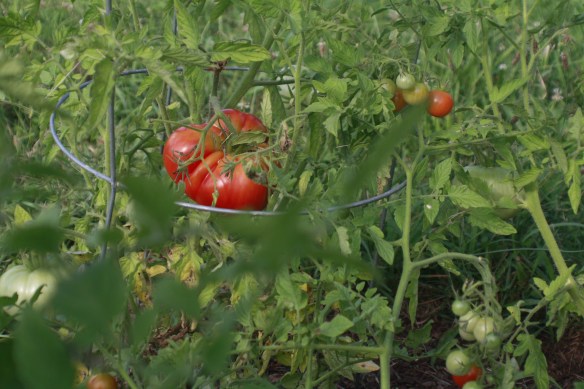
Zay is enjoying picking the tomatoes that are now constantly ripening.  Sometimes, under our watchful eyes, he picks them fully ripe, but usually the little cherry tomatoes are barely orange, and he wipes it on his shirt, pops it in his mouth and says, “Hmm, that was pretty good.”

As we grow in relationship with our loving Father, Who is always watchful, we begin to see the beauty of the “appointed time.”  He answers, and we are fed.  Sometimes, we rush the answer–rush the fruit, and it’s a bit tart and hard to swallow.  But in His ultimate sovereignty, somehow, we are fed.  Sometimes, we aren’t listening, aren’t attentive, and miss the perfect time.  We show up late, and the fruit has begun to rot.  It’s mushy and past its prime, and hard to swallow.  But in His ultimate sovereignty, we are fed.

In these “off times,” we vow to listen more closely and be more attentive.  To draw closer to our Father, who always knows the perfect time.  Habakkuk tells us, “For still the vision awaits its appointed time; it hastens to the end—it will not lie. If it seems slow, wait for it; it will surely come; it will not delay.” (2:3 ESV)

I pray we are patient, and “hold unswervingly to the hope we profess, for He who promised is faithful” (Hebrews 10:23 NIV).  Let us wait for the fully ripened fruit that God has prepared in His time.  I assure you, it will not be late.  And we’re capable of waiting.

It will be so good.

_MG_8359

Mitigating Weakness

We live in this world where we think we should be perfect.  News stories embroiled in controversy and judgment.  Instagram filters and photoshop for so many teenagers, let alone magazines.  Advertisements shrieking beauty and attention and money, selling the elusive perfection.  Expectation, expectation.

Criticism.

We apply for schools, or work, or meet new people, or God forbid, date.  And have to give this account of ourselves.  Life necessitates us committing to exposing ourselves.  Looking for work is terrible:  listing your life in blurry dates and bullet points, searching Indeed.com and wondering if your resume is ever actually read by a human being.  Character examinations, cover letters and the challenge of explaining your career decisions and gaps in employment in first interviews make us paranoid.  We begin to question ourselves for every move we make.  We’re afraid to take chances, make mistakes.  And dating is even worse.

But life is messy.  We are imperfect.  And our stories have much more to tell of grace and eeking by than they do high on the mountaintop successes.

As I grow older, I find that God is so patient and loving with my flaws, my shortcomings.  My bossiness and a lot of ignorance.  My sharp words and fear of confrontation.  My hate of change, and a mild inheritance of OCD.

In His infinite wisdom, He created each of us perfectly.  All of our character is intricately designed to worship Him, to love Him.  To honor Him.

Paul says that “when I am weak, then I am strong.”  (2 Corinthians 12:10B NIV)

As we mature, we begin to understand that our messiness, our insecurities and our brokenness are capable of honoring Him too.  In laying bare all of ourselves– our strengths, our weaknesses, our desires, our fears– at the foot of the cross, Christ can begin to do His transformative work.

Our hesitancy can become intentionality.

Our directness can make us powerful truth speakers.

Our irrational fears can motivate us.

Our neurotic attention to detail can benefit a mindful servant’s heart.

Our ambivalence can be set aflame.

Our uncertainty is transformed to trust.

Love transforms us.  Perfect love doesn’t question itself and pick apart the flaws, but flings itself into the ocean of selflessness and is.  No beginning.  No end.  There’s a beautiful poem, “Saint Francis and the Sow,” that says,

“though sometimes it is necessary
to reteach a thing its loveliness,
to put a hand on its brow
of the flower
and retell it in words and in touch
it is lovely
until it flowers again from within, of self-blessing…”

All parts of us can be healed.  Can be loved.  Can bring light and love to a broken, messy world that is desperate.  We are worthy of second interviews, second dates.  And lifetimes of commitment.

Ephesians 2:10 says, “For we are God’s workmanship, created in Christ Jesus to do good works, which God prepared in advance for us to do.” (NIV)  Isn’t it incredible that God, the Creator of the universe and each thing in it, knows our every detail, and loves every bit of us anyway?  He knew.

He knew.

Find Beauty

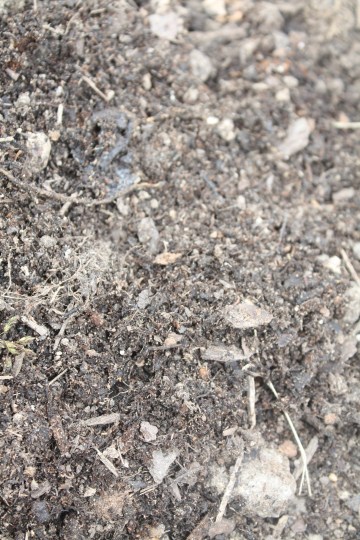
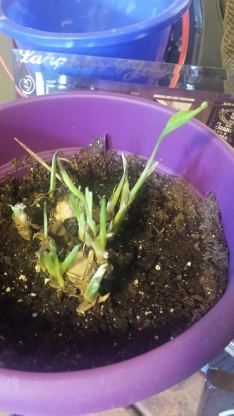
Our little family has planted a garden of vegetables and herbs over the course of the last month.  Thanks to copious amounts of downpour, it’s taken over three weeks to get our little garden beds and potted herbs all the way planted.  We talked about stages of seeds while we placed tiny eggplant and flat cucumber seeds into the ground.  About how incredible it is that the seed must sit in the dark ground, heaped with manure.  And die.  In order to become this growing, flowering, fruit producing sustenance for  us.  (Also how the basil seeds planted into the carpet would not produce any kind of flower because it wasn’t cared for properly.)

Dirt

I recently watched a CT scan video on the changes that happen to a caterpillar in the chrysalis.  Science is wonderful.  Without damaging the insect, we’ve discovered how the structure of a caterpillar is completely broken down.  While we’ve traditionally called the insect a “soup” in this stage, it’s incredible the breakdown that occurs.  Organs change; muscles break down at a cellular level to rebuild and “imaginal discs” show themselves in the formation of the adult butterfly.  The caterpillar must, at a cellular level, completely de-compose in order to move to its next stage of life.

While human beings don’t undergo the intensive metamorphosis that seeds or caterpillars do, Christ does tell Nicodemus that we “no one can see the kingdom of God unless he is born again.”  (John 3:3 NIV)  And that we must “count (ourselves) dead to sin but alive to God in Christ Jesus.”  (Romans 6:11 NIV)

These words seems to have lost their shock value, and have been twisted and misunderstood over time.  Born again means stepping into the realm of our “God inheritance” as a child of God.  And dead to sin doesn’t mean we devalue our human experience, but that we embrace and trust enough to make Jesus Lord in our lives.

Once we step into our God-ordained identity and begin the transformation, we still struggle.  We still have problems.  Life is still hard.  In a culture where prosperity theology runs strong, we often ask ourselves what we’re doing wrong or why we deserve hardship.

But Psalm 10 says, “In his pride the wicked does not seek (the Lord); in all his thoughts there is no room for God.  His ways are always prosperous; he is haughty and Your laws are far from him; he sneers at all his enemies.  He says to himself, ‘Nothing will shake me.  I’ll always be happy and never have trouble.”  (v 4-6 NIV)

David says its the “wicked” who are trusting they’ll always be happy, and never have hardship.  How often do we fall into this mentality?  We trust our jobs, our planning, our competence, our strengths.  And if things are good, we’re not often down on the ground, face to the Earth, begging God to be Lord in our lives.  We think that we can “handle” things, that we aren’t desperate for God to act in our lives.  And we expect that the jobs, the health, the good fortune to last.

But life isn’t about one stage, or one season.  Change is the only constant in the natural realm.  And security doesn’t exist outside of God.

Paul encourages us in Romans 12, “Don’t copy the behavior and customs of this world, but let God transform you into a new person by changing the way you think.” (v2a NLT)

We are called to be the seed in the manure, the caterpillar in the cocoon.  To find beauty, even in the midst.  And God, who is ever faithful, will work His wonders.

Plant

Seeing the Dirt

Zay, my sweetest snuggle bug who has evolved into a spitfire ball of energy and questions, is constantly doing disgusting things.  Par for the course in the life of a three year old boy, I suppose.

This week it was, “Don’t lick that standing water!”

“Don’t open the toilet seat with your flashlight!  Don’t close it either… just don’t touch the toilet seat.  With anything!”

“Don’t play in the dirty laundry!”

“Don’t touch that poopy diaper!  Why do I even have to say that?”

His answer is always, “Why?”

Par for the course, right?

As he grows with me, and walks in step with me, he learns what he should and should not do.  What is acceptable and when.

I can’t help but think of my relationship with Father, as my boy looks to me and tests me to see if he can lick sitting water off of the trampoline.  Don’t I do just the same thing?

Trying to obey and do the right thing.  Growing in understanding of what I should and shouldn’t do.  Trying hard to be intentional about what I’m around, what I see and who I talk to.  And how I interact with the world around me.  Looking to God with much prayer for much needed direction.

Phillips Brooks has been quoted saying, “The true way to be humble is not to stoop until you are smaller than yourself, but to stand at your real height against some higher nature that will show you what the real smallness of your greatness is.”

The longer I walk with Him, the more I see that  “all of us have become like one who is unclean, and all our righteous acts are like filthy rags” (Isaiah 64:6A NIV).  Not because I’m this gross, dirty thing, but because my best, in comparison with Perfection, pales.  Significantly.

The longer I am in relationship with Him, the more I realize how many questions I have.  For I have much to learn.  And much to grow in.